Local Life
How to Find a Nanny in Bangkok: What Eight Years and Four Hires Taught Me
September 2, 2026 · Updated October 2, 2026 · by BKK Families
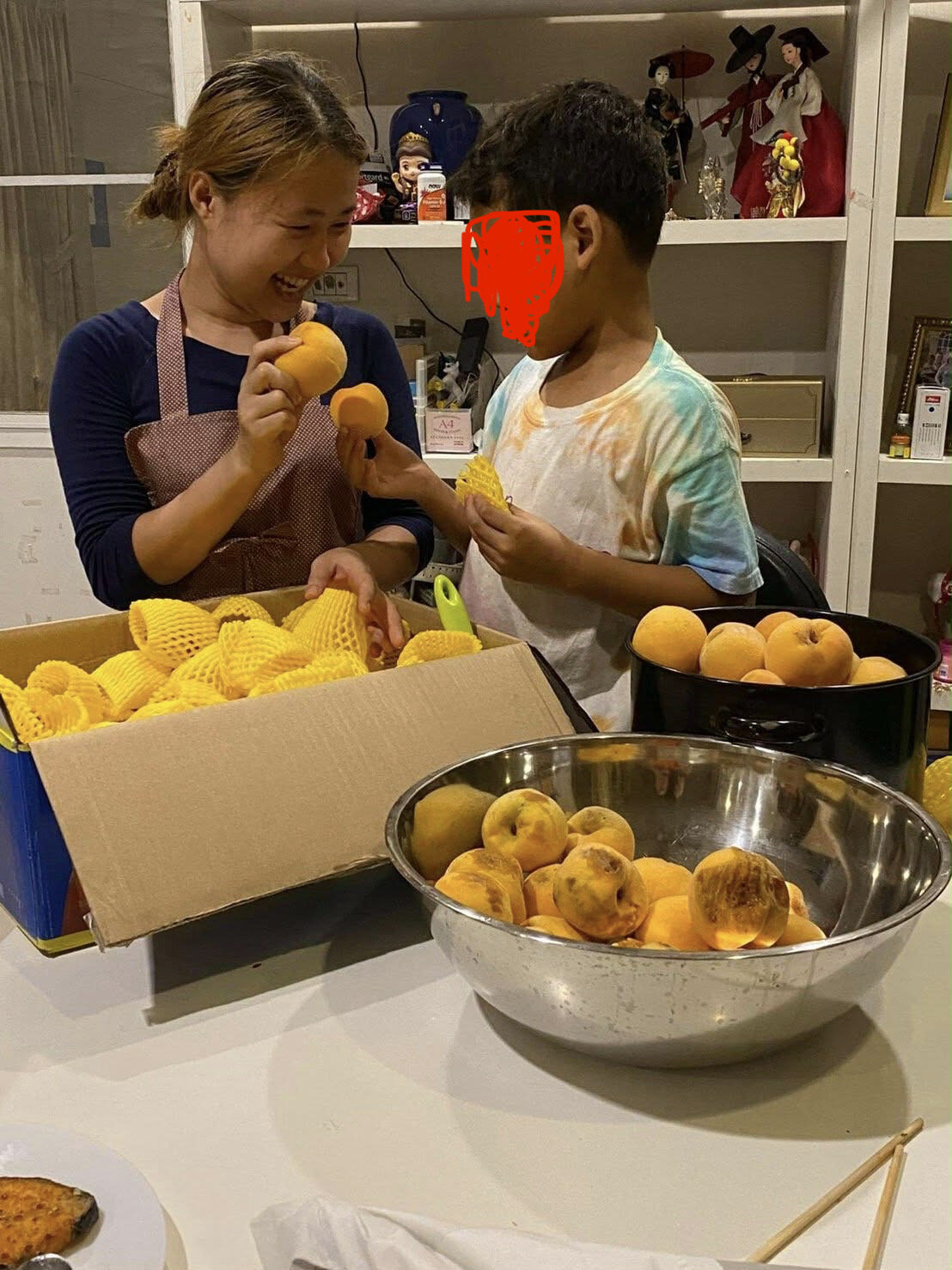
Barely a week goes by in the Bangkok Expat Families group without someone asking about nannies. Where do I find one. What should I pay. Live-in or live-out. Is 18,000 too much, is 12,000 insulting, does she need to speak English, can I trust a stranger in my house with my kids.
I ran that group while I was living the answer. From 2012 to 2020 I had nannies in my home, first in Nonthaburi and then in Bangkok. I went through three or four before I found the two who stuck, and both of them became part of our family in a way I did not expect when I first typed a post asking for help. We moved back to the States years ago and we still visit both of them when we come to Thailand. We take them out for lunch.
So this is not a guide written by an agency that gets paid when you hire someone. Nearly every article that outranks this one on Google is. Search for a nanny in Bangkok and you will find HelloNanny, FamBear, Carenest, Kiidu, ThaiHelper, Madawa and Ayasan, and every one of them earns a placement fee when you take their advice. One of those sites claims the average Bangkok nanny costs 41,800 baht a month. I want to be polite about this, so I will just say that number would have surprised every family I knew in eight years.
First, know what you are hiring
Expats arrive with three separate job titles in their head: nanny, maid, housekeeper. In most Bangkok households they are one person. The Thai word is phi liang, which literally means the older sibling who raises you, and that tells you most of what you need to know about how the role is understood here. It is not a babysitter who watches the kids and leaves. It is a person who becomes part of the running of your house.
Our arrangement was typical. Childcare first, then cooking, cleaning, help with the grocery shopping, the dog, and the school run maybe twice a month when neither of us could make it. If you go into this expecting someone who does childcare and nothing else, you will pay more and you will find fewer candidates, because that is not how the job is understood in this market.

Decide the scope before you post anything, and write it down. The families I saw struggle were almost always the ones who hired for one job and slowly expected three.
Where to actually find someone
Word of mouth is still the best channel. Our first nanny, Pa Aoy, came through a family recommendation. Pa is the respectful word for an older woman, and that is what our kids called her from the first week. A recommendation from someone who has actually watched a person work for a year is worth more than any agency screening, because it is the only reference that has been stress tested by time.
So ask everyone. Colleagues, condo juristic staff, other parents at the school gate, your building's security guards. Nannies in Bangkok have wide networks and they will refer their friends and cousins, which is a channel most expats never think to use.
Facebook groups are the volume channel. When we needed our second nanny I posted in the group. The post was not clever. It said we needed a nanny to look after our kids, cook and clean. That was it. We got more than fifty replies.
Which sounds like a great problem until you try to process fifty replies. We narrowed it to about ten interviews, and a good number of those simply did not show up. No message, no explanation. This is normal and it is not personal. Many candidates are messaging every family who posts, some are already employed and testing the water, and some decide the commute is impossible once they look at the map. Budget for the no-show rate. If you want to meet ten people, line up fifteen.
Here is something I can tell you that the agency guides cannot, because I moderate that group. I get roughly three times as many post requests from nannies looking for work as I do from families looking for a nanny. I do not approve most of the nanny-side ones, because there are so many that the group would turn into a job board overnight. I also limit how many looking-for-a-nanny posts go up in a given week, for the same reason. If your post has ever sat in the queue for a bit, that is why.
That ratio is the single most useful thing I know about this market. It is supply-heavy. There are far more people wanting this work than there are families offering it, which is why one plain post got me fifty replies, and it means you have more room to be selective and more time to get it right than the panic of the search makes it feel. The exception is the specialist end: strong English, Mandarin or Japanese, newborn experience, or a driving licence. Those candidates are genuinely scarce and they know it, and that is where the market flips and you are the one competing.
Agencies are the convenience channel. They charge a one-off placement fee, usually somewhere between 5,000 and 25,000 baht, and in return you get a shortlist, some paperwork help and often a replacement guarantee if it does not work out in the first month or two. The agencies and booking platforms operating in this space include Ayasan, Kiidu, FamBear, Carenest, HelloNanny, ThaiHelper, Madawa and BeNeat, some placing full-time staff and some closer to on-demand cleaning and sitting. I am listing them without recommending any of them, because I never used one.
An agency is worth the money if you are arriving cold with no network and no Thai, or if you need someone next week. Just understand that the agency is also advising you on the salary, and the agency's fee often scales with that salary. Read their pay guidance accordingly.
What to pay
This is the question everyone actually wants answered, so here are real numbers. We paid 15,000 baht a month for a live-in nanny, all meals included, one day off a week, and a one month bonus at the end of the year. That was our arrangement across those eight years.
I want to be honest about that figure rather than present it as a benchmark, because two things are true about it. First, 15,000 baht in 2012 is worth roughly 17,100 baht in today's money, and the same 15,000 in 2020 is worth about 16,200 today. Second, we kept it at 15,000 across the whole period, and looking back that is the one thing I would do differently. A flat salary quietly shrinks every year. If you are hiring now, build in a review, even a small one, and say so at the start.
Here is where the market sits in 2026. For a full time live-in nanny, agencies quote 16,000 to 25,000 baht a month, and the families I know actually pay 15,000 to 20,000. Live-out full time is quoted at 15,000 to 30,000 and really lands around 18,000 to 22,000, since she is covering her own rent and transport out of it. A maid or housekeeper with no childcare runs 12,000 to 18,000. Combine the two roles, which is what most families actually want, and you are looking at 18,000 to 24,000.
The specialist rates sit well above that. Strong English gets quoted as high as 50,000 and realistically costs 25,000 to 35,000. Mandarin or Japanese is genuinely scarce and genuinely expensive, usually 25,000 to 35,000 and often more. A newborn specialist runs 22,000 to 30,000. Part time and hourly work is quoted at 350 baht an hour by the agencies, while the real rate is closer to 200 to 300 an hour, or 800 to 1,200 for a full day.
Location moves the number too. Central Sukhumvit runs roughly 20 to 30 percent above outer Bangkok. A live-out nanny in Phrom Phong costs meaningfully more than the same person in Bang Na, partly because of what she has to spend and how long she has to travel to get to you.
One useful floor: Bangkok's minimum wage went to 400 baht a day on 1 July 2025. Nobody in this market is auditing household payroll, but it does tell you where the wider labour market has moved, and it means anything under about 12,000 a month now reads as low even for a live-in role with meals. Take it as a pricing signal rather than a legal one.
Then there are the extras people forget when they budget. A thirteenth month or year-end bonus is not required and is effectively expected, and we paid one month. Songkran money runs 1,000 to 5,000 baht, more for long service. For a live-in you either feed her properly or pay 2,000 to 3,000 a month for food, and feeding her properly is better and costs about the same. For a live-out, 1,000 to 2,000 a month toward transport is normal. And for someone from Isaan or from across the border, helping with the fare home at Songkran and New Year matters more than the amount suggests.
Live-in or live-out
Both of ours lived with us, and geography is why. We were in Nonthaburi first, out toward the international school side of the river, and then in Bangkok. Anywhere with a house and a real commute pushes you toward live-in almost by default. Nobody is going to reliably reach you at 6:30 in the morning from the far end of a BTS line.
Broadly, the pattern across the city looks like this. Condo families in Phrom Phong and Ekkamai lean part time or live-out. Sathorn and Ari lean full time, usually because of cross-town school runs. Bang Na, Nichada Thani and the outer house neighbourhoods lean live-in.
Live-in is cheaper per hour, more flexible, and far more likely to turn into a real relationship with your family. It also means someone else lives in your home, which changes the house. You need a genuine room with a door and a lock, not a converted store cupboard, and you need to be disciplined about the day off actually being a day off. The single fastest way to lose a good live-in nanny is to let she is here anyway turn into a seven day week.
Live-out gives you your evenings back and a cleaner separation between employer and family. You pay more for it and you lose the flexibility. If your childcare need includes early mornings, late dinners or travel, be realistic about whether live-out actually covers it.
Languages, and the English question
Our first nanny was Isaan Thai. Our second, Sarapao, was Burmese and spoke Thai. That combination is very common in Bangkok households and worth understanding. A large share of the domestic workforce here is Thai from Isaan or migrant from Myanmar, and Thai is the working language in both cases. Our kids grew up with Thai in the house, which I now consider one of the better accidents of the whole arrangement.
English is where families overpay. English-speaking means completely different things to different people, and it is the single easiest thing for a candidate to overstate. There are really three tiers: enough English to follow simple instructions, enough to talk through a day and a problem, and enough to be a genuinely bilingual presence for your child. The gap between the first and the third is 15,000 baht a month.
Test it properly, because a CV will not. Do the interview in English without slowing down or simplifying. Ask her to describe what she would do if your child had a fever, or refused to eat, or fell at the playground. Then do a paid trial day and see whether she can actually follow you in real time in your real house. And when you check references, ask specifically whether communication worked in practice, not whether her English was good.
One note on nationality while we are here. Household work is on Thailand's restricted-occupation list for foreigners, and the only foreign nationals who can legally hold a work permit for it are from Myanmar, Laos and Cambodia under a long-standing MOU arrangement. Filipina nannies are widely sought in this city and widely employed, but they are almost always working outside that framework, and it is the employer who carries the exposure. I am not going to pretend enforcement is common, because it is not. Just go in knowing which arrangement you are actually in.
Trust, which is the real question
There is no licensing body for this job in Thailand. No certification, no register, no qualification. When an agency describes someone as a certified nanny, that means whatever the agency has decided it means. So you build trust the slow way.
Get a police clearance certificate. Thai nationals can obtain one from the Royal Thai Police. It is cheap, it is routine, and asking for it is not an insult.
Call the references, in Thai. Copies of the ID card and house registration are standard, but the phone call is what matters. Get someone who speaks Thai to make it if you do not, because the previous employer may well be a Thai family and the honest version of the answer will not come out in English.
Run a paid trial week. Not a trial hour. A week, paid properly, with you around. This is where you learn everything the interview could not tell you.
Then expect to correct things, because you will. Sarapao was wonderful with our kids and there were still real things to work through. Sometimes the cleaning was not to the standard we wanted and we had to say so. She was too lenient with screen time and would let the kids have it when we had said no. Neither of those things made her a bad hire. She learned quickly how we wanted the house run, and the reason she learned quickly is that we told her clearly and early.
That is the part I would push hardest on. Almost every nanny horror story I heard in eight years started with a family that was too polite to say what they wanted and then got quietly resentful about not getting it. Say it in week one. Say it kindly and say it plainly. And remember that in Thai workplace culture, direct criticism lands harder than you intend, so lead with what is going well.
Also worth saying: we went through three or four people before we settled. That is not failure, it is the normal shape of this. A hire that does not work is a mismatch, not a betrayal, and the sooner you act on it the better for everyone, including her.
Worth knowing, briefly
Thai law was updated in April 2024 and domestic workers now formally have minimum wage coverage, an eight hour day, one full rest day a week, thirteen public holidays, six days of annual leave after a year, up to thirty days of paid sick leave and maternity protection. Domestic workers remain outside the social security system, which means no state healthcare or pension attached to the job, and severance rules do not apply.
Realistically, almost no household in Bangkok is administering any of this and nobody is checking. I mention it for two reasons. It tells you roughly what a fair arrangement looks like, and the social security gap is a genuine hole worth filling yourself. Private health cover for someone who lives in your home and looks after your children is not expensive, and it is the right thing to do.
Ending it well
Ours ended because we moved. Pa Aoy did not come with us when we left Nonthaburi for Bangkok. Sarapao did not come with us when we left Bangkok for the States.
The law required us to pay nothing. We gave Sarapao two months of salary as a leaving bonus, made sure everyone we knew heard she was available, and she had a new family within weeks. That is what a good reference from a settled family in this city is actually worth, and it costs you nothing to give.
If you take one thing from all of this, take that. The families who had the best experiences with nannies in Bangkok were not the ones who paid the most or screened the hardest. They were the ones who treated it as a real relationship with a real person, said what they wanted early, paid a bit above what they had to, and protected the day off.

We left Thailand years ago. We still visit Pa Aoy and Sarapao when we go back, and we still take them out for lunch. Eight years on, that is the part I would tell you about first.
If you have a nanny you would recommend, or a question this did not answer, the Bangkok Expat Families group on Facebook is still the best place in the city to ask.
Frequently asked questions
How much does a nanny cost in Bangkok in 2026?
A full time live-in nanny realistically costs 15,000 to 20,000 baht a month, and a full time live-out nanny 18,000 to 22,000, since she covers her own rent and transport. A combined nanny and housekeeper runs 18,000 to 24,000. Agencies quote higher, often 25,000 to 35,000 and above, and one agency site puts the Bangkok average at 41,800 baht, which is well above what most families here actually pay. Budget separately for a year-end bonus, Songkran money, food and transport.
Where is the best place to find a nanny in Bangkok?
Word of mouth first. A recommendation from a family who has actually employed someone for a year beats any agency screening. After that, Facebook groups like Bangkok Expat Families are the volume channel, where one plain post can draw fifty or more replies. Agencies are the convenience option if you are arriving cold with no network, charging a one-off placement fee of roughly 5,000 to 25,000 baht.
Should I hire a live-in or live-out nanny in Bangkok?
Geography usually decides it. Condo families in central areas like Phrom Phong and Ekkamai often manage with part time or live-out help, while families in houses in Bang Na, Nichada Thani and the outer neighbourhoods lean live-in because nobody can reliably commute to a 6:30am start. Live-in is cheaper per hour and more flexible, but it requires a proper room with a door and a lock, and real discipline about the weekly day off.
Can I hire a Filipino nanny in Thailand?
Household work is on Thailand's restricted-occupation list for foreigners. The only foreign nationals who can legally hold a work permit for domestic work are citizens of Myanmar, Laos and Cambodia under a long-standing MOU arrangement. Filipina nannies are widely sought and widely employed in Bangkok, but almost always outside that framework, and the employer carries the legal exposure. Enforcement is uncommon, but it is worth knowing which arrangement you are in.
How do I check whether a nanny in Bangkok is trustworthy?
There is no licensing body or certification for this job in Thailand, so a certified nanny claim means whatever the agency decided it means. What works instead is a police clearance certificate from the Royal Thai Police, copies of the ID card and house registration, a reference call made in Thai rather than English, and a paid trial week with you at home.
Do nannies in Bangkok speak English?
Some do, but English-speaking means very different things to different people and it is the easiest thing on a CV to overstate. Expect three broad tiers: enough English to follow simple instructions, enough to discuss a day and a problem, and enough to be a genuinely bilingual presence for your child. That top tier commands a large premium. Test it by interviewing in English without simplifying, then running a paid trial day.